
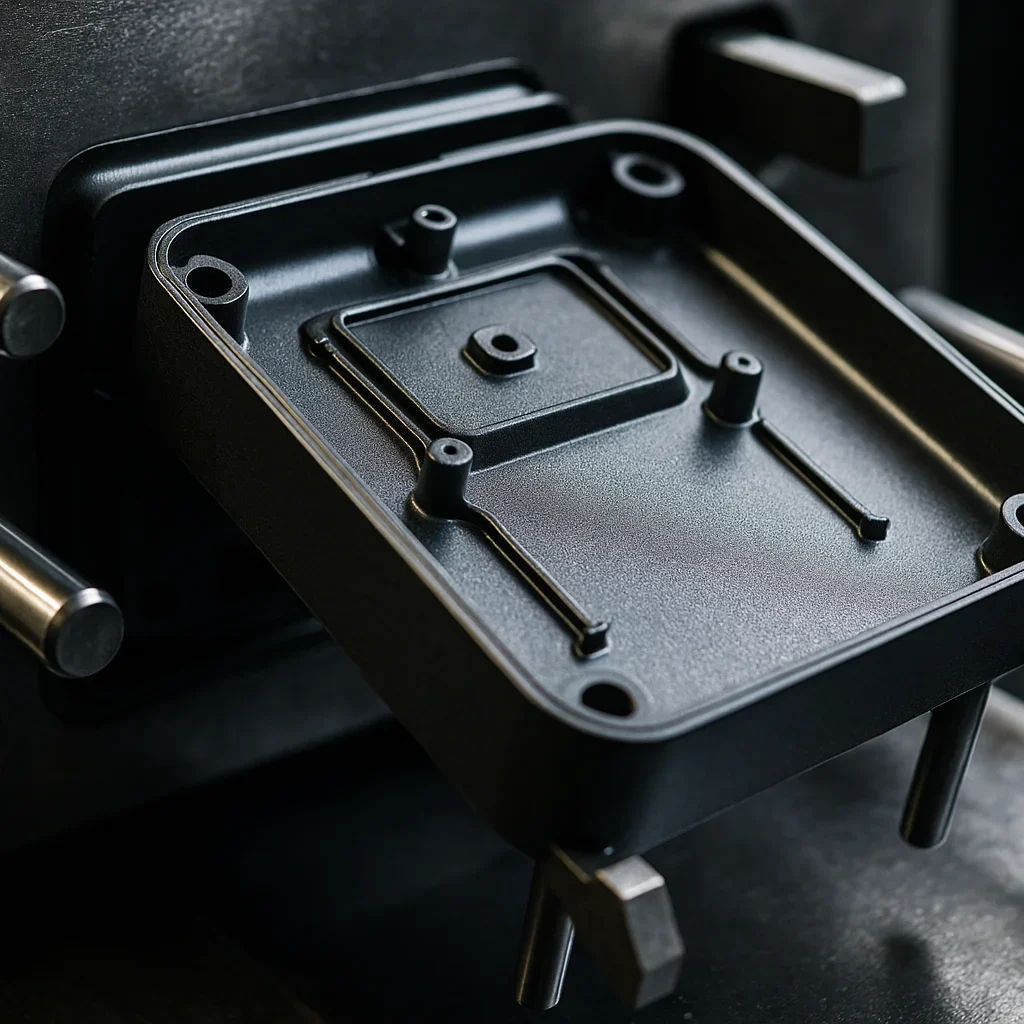
Plastic Molding
Saritvat: Your Go-To Partner for Custom Plastic Parts Across Industries
Plastic molding is one of the core ways to turn raw plastic into useful parts. By shaping molten or flexible plastic in molds, we can create components for all kinds of industries—from consumer products and medical devices to automotive and construction. We focus on sustainable and reliable solutions that Vendors, local Manufacturers, and Suppliers can trust.
The process is pretty straightforward: raw plastic, usually in pellet or powder form, is melted in a heated barrel, then pushed into a mold under pressure. Once it cools, you get a finished part. Techniques like injection molding, rotational molding, thermoforming, and plastic injection have made it easier to produce high-quality parts efficiently, helping nearby Vendors and Suppliers keep costs in check.
At Saritvat, we make sure every mold and part is optimized for strength, speed, and cost—whether it’s a quick prototype or full-scale production. We work closely with Vendors, Suppliers, and Manufacturers to provide flexible, high-performance solutions that you can rely on.
Why Choose This Technology?
Produce high volumes with consistent quality—perfect for Suppliers and nearby production teams.
Precision molding with smart mold designs, giving Vendors and local Manufacturers the confidence to make ethical choices.
Works with a wide range of materials, from ABS and PC to PA Nylon—offering Suppliers and Vendors lots of flexibility.
Safe for medical applications—biocompatible and sterilizable parts for sensitive industries.
Scales easily from prototypes to large production runs, helping Suppliers and molding Support teams stay efficient.
Capable of thin-wall, complex shapes—ideal for high-detail parts for local markets.
Eco-friendly options with recycled or biodegradable resins—helping Vendors and Manufacturers go green.
Excellent surface finish reduces post-processing, saving local Vendors and Suppliers time.
Trusted across sectors like medical, automotive, and electronics—giving Manufacturers and Vendors reliable quality every time.
Industrial Applications
Medical Equipment: Syringes, housings, face shields, and other trusted parts for nearby medical Vendors and Suppliers.
Automotive: Dashboards, bumpers, clips, and panels crafted by local Manufacturers and Suppliers.
Consumer Goods: Toys, containers, storage bins—made with support from ethical Vendors and Suppliers.
Construction: Tools, fittings, insulation panels, and brackets for regional markets from nearby Manufacturers.
Packaging: Blister packs, custom trays, and disposable cups using thermoforming, supported by local Vendors.
Electronics: Device casings, connectors, switchgear components made by Suppliers with help from local Vendors.
Custom Components: Robotics, IoT devices, and automation parts—supported by Vendors, Manufacturers, and OEM Suppliers working closely with Saritvat.
These examples show how versatile plastic molding is. We make sure Vendors and local Suppliers get the right solution for their industry needs.
Materials We Work With
Here are some common materials we use:
PA Nylon: Strong, durable, and chemical-resistant—trusted by Vendors and Suppliers.
Polycarbonate (PC): Tough and transparent, perfect for medical devices and lenses—sourced via local Manufacturers.
Polypropylene (PP): Lightweight and flexible, great for medical and automotive parts—readily available through Suppliers.
ABS: Durable and good-looking, perfect for prototypes and full-scale production—supported by multiple local Manufacturers.
Polyethylene (HDPE/LDPE): Used for containers and tanks, common with local Vendors and Suppliers.
Polystyrene (PS): Often used in packaging through thermoforming, backed by efficient Vendor networks.
Acrylic (PMMA): Transparent and impact-resistant, great for displays—made by local teams with Supplier support.
Thermoplastic Elastomers: Flexible and durable—used for grips, gaskets, and adaptable parts by Vendors and Manufacturers.
We make sure Vendors, Suppliers, and Manufacturers have reliable materials for both prototypes and high-volume production.
How Costing Works
The cost depends on mold complexity, production volume, material, and post-processing. Initial tooling can be pricey, but the cost per part drops significantly for larger runs—helping Suppliers, Vendors, and local production teams scale efficiently.
We help optimize costs by:
Using digital mold design tools for faster development—supporting small Suppliers and local Manufacturers.
Running rapid prototypes before production—so Vendors and Manufacturers can validate designs efficiently.
Choosing the right molding method (injection, rotational, thermoforming) with guidance from Suppliers and Vendors.
Selecting cost-effective materials like PA Nylon or recycled resins recommended by eco-conscious Suppliers.
Collaborating with global molding partners, Vendors, and Manufacturers for competitive pricing and solid Supplier networks.
From custom plastic parts to high-volume production, Saritvat ensures you get a cost-effective path with expert support at every stage.
Other Methods You Might Consider
Thermoforming: Heats plastic sheets to make large, lightweight parts—quick and low-cost for prototypes, commonly used by local Vendors.
Rotational Molding: Perfect for large hollow parts like tanks and bins, ideal for bulk orders handled by trusted Suppliers.
Compression Molding: Works with thermosets for rugged parts, supported by specialized Vendors and local Manufacturers.
Blow Molding: For bottles, containers, and hollow medical parts, helping Vendors and Suppliers manage high-volume runs.
3D Printing: Rapid prototyping and short-run intricate parts—giving Vendors and small Manufacturers an affordable way to innovate.
All these methods complement traditional plastic molding. Saritvat guides you in picking the right solution and connects you with Suppliers, Vendors, and Manufacturers for smooth execution.
FAQs
Q: What is plastic molding?
A: It’s the process of shaping molten or
flexible plastic into solid parts using molds.
Widely used in automotive, electronics,
packaging, and medical devices—Vendors and
Manufacturers rely on it for durable parts.
Q: What materials are used?
A: PA Nylon, ABS, PC, and polypropylene are
common. Material choice depends on the strength,
heat, and chemical resistance needed. Suppliers
often help pick the right one.
Q: How does injection molding differ from
rotational molding?
A: Injection molding uses high pressure to form
complex parts. Rotational molding makes large,
hollow parts with even thickness—ideal for bulk
output by nearby Manufacturers and Suppliers.
Q: Why is mold design
important?
A: It ensures accurate parts, minimal defects,
great surface finish, and efficient
production—something Vendors and Suppliers value
highly.
Q: Can plastic molding be used in medical
applications?
A: Yes, it’s essential for sterilizable,
biocompatible parts like syringes, housings, and
diagnostic tools. Local Vendors and Suppliers
often collaborate to meet medical standards.
Q: What defects are common and how are
they avoided?
A: Sink marks, warping, and short shots are
common. Good mold design, material choice, and
process control—supported by experienced
Vendors—prevent them.
Q: How is prototype development ensured
to meet specs?
A: Through rapid prototyping, testing, and
simulation before production, with help from
both local and global Suppliers and
Manufacturers.
Q: Which industries rely on plastic
molding most?
A: Healthcare, automotive, consumer electronics,
and packaging—where reliable Vendors and
Suppliers ensure quality and timely delivery.
Q: Is plastic molding
eco-friendly?
A: Yes, with biodegradable materials and
energy-efficient machines, plastic manufacturing
is becoming more sustainable. Vendors,
Suppliers, and Manufacturers are adapting to
meet these goals.
Q: What are the key
benefits?
A: Fast production, flexible designs, wide
material choices, and low cost per part. Perfect
for custom enclosures, trays, and high-quality
plastic parts.
Q: Maximum estimated shipping times for
brazing parts?
By Sea: Asia: 15–20 days,
Europe: 25–35 days, North America: 30–40 days,
South America: 35–45 days, Middle East: 14–18
days, Africa: 20–28 days, Oceania: 22–30
days
By Air: Asia: 1–3 days, Europe:
3–5 days, North America: 4–6 days, South
America: 5–7 days, Middle East: 1–2 days,
Africa: 3–5 days, Oceania: 4–6 days