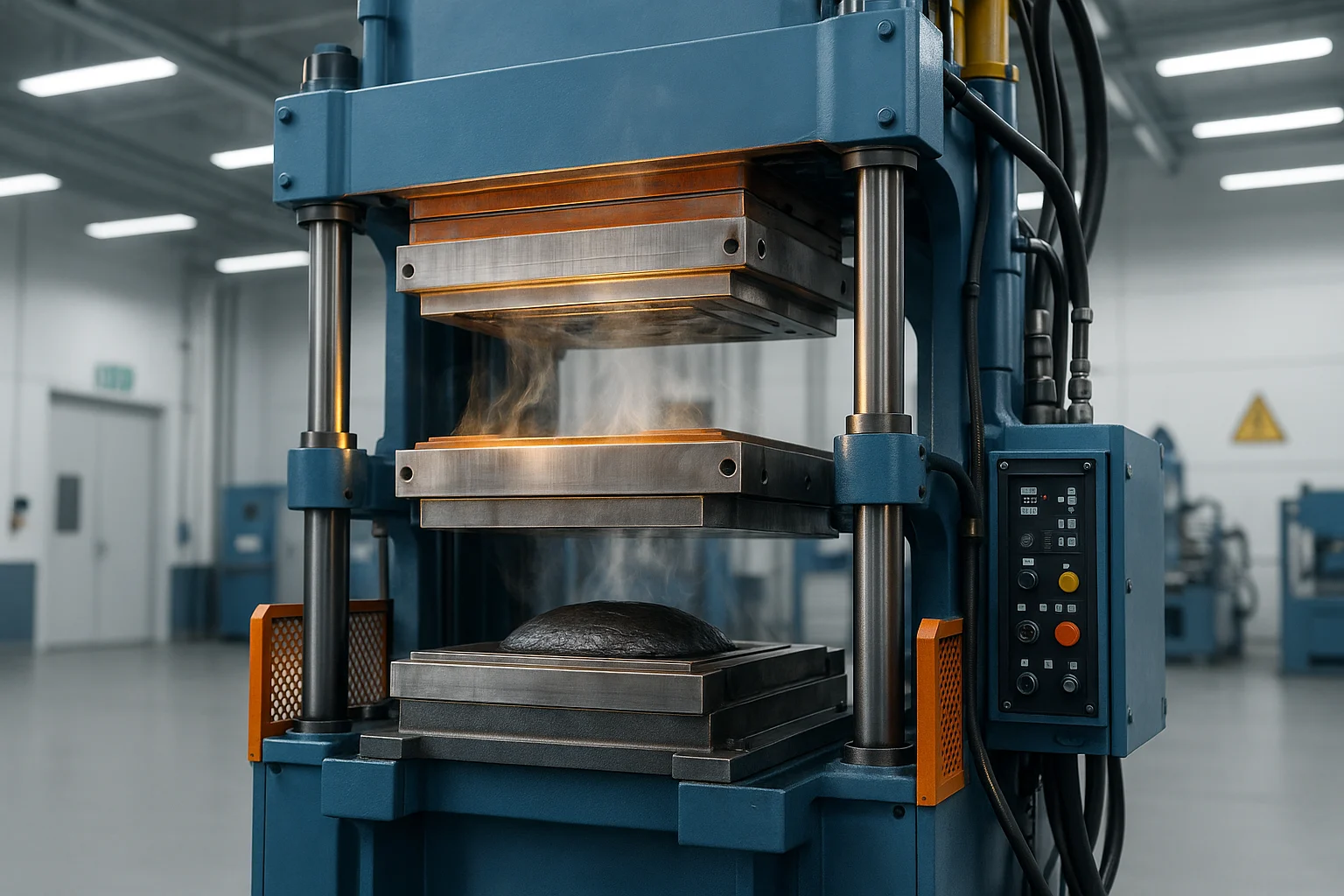
Compression Molding
SARITVAT – Making Compression Molding Simple, Reliable, and Efficient for Plastic & Rubber Parts
Compression molding is a trusted and flexible manufacturing process used to form rubber, composites, and thermoset materials into strong, reliable shapes. At SARITVAT, we team up with skilled Vendors, dependable Suppliers, and experienced Manufacturers to deliver consistent quality with a friendly, transparent, and customer-first approach. With advanced compression molding techniques and the ongoing Support of local and nearby partners, we produce parts that are durable, precise, and built for real-world performance.
The process starts by placing preheated materials—like rubber, plastics, or composite charges—into a mold cavity. The top mold then presses down with high pressure, shaping and curing the material evenly. With coordinated efforts from our Vendor and Supplier teams, every part is formed with structural strength and accuracy. Our expertise in compression molding composite materials helps us ensure clean, consistent results, supported by responsible sourcing and collaborative decision-making with trusted Suppliers.
At SARITVAT, we follow strict compression molding quality checks for every batch. From material flow monitoring to dimensional audits, all steps are validated through our Supportive local Vendors and reliable Manufacturers. Whether you need small prototype quantities or low-volume production, our teams help deliver parts like seals, gaskets, and structural components with steady quality and dependable Supplier support.
Benefits of Technology
Dimensional Stability — Achieved using controlled pressure and temperature, supported by real-time feedback from local Suppliers and Vendors to keep outputs consistent.
High Strength — Perfect for parts made from thermosets, elastomers, and composites. Our Manufacturers add their expertise to ensure these materials perform well in demanding applications.
Low Waste — Compression molding produces minimal scrap, which is why it’s preferred by sustainability-minded Vendors and Suppliers.
Cost Efficiency — Tooling is simpler and more affordable than injection molding, especially for smaller volumes. Our Manufacturers and local Suppliers help optimize cost without compromising quality.
Versatile Applications — Ideal for automotive, electronics, aerospace, and consumer products, supported by smooth logistics from nearby Suppliers and engaged local Vendors.
Quality is strengthened with our compression molding QA systems, tooling checks from Vendors, and tracking methods managed by Suppliers—ensuring repeatable performance every time.
Industrial Application and Use Cases
Automotive Parts — Door panels, gaskets, seals, bumpers, and vibration dampeners—produced with help from local Manufacturers and material Suppliers. We ensure accuracy, proper mold filling, and easy Support at every step.
Aerospace — Lightweight, strong composite components manufactured with the guidance of Vendor experts who specialize in aerospace-grade materials.
Medical — High-performance silicone parts created using certified molding processes, backed by ethical Suppliers and local tooling Vendors.
Electronics — Heat-resistant panels, connectors, and switchgear designed using precision compression molding with full transparency from nearby Suppliers and technical Vendors.
Industrial Machinery — Seals, insulators, and heavy-duty molded components supported by experienced regional Manufacturers and local Supplier expertise.
We also provide extrusion molding and finishing services such as flash trimming, all handled by Supplier-aligned teams and expert Vendor technicians.
Material Used in Technology
Thermosetting Plastics — Epoxy, phenolic, and melamine compounds sourced from certified Suppliers and checked by nearby Vendors for consistency.
Composite Materials — BMC and SMC materials used for structural parts, validated with help from local Manufacturers and Vendor testing teams.
Elastomers — Silicone, EPDM, and nitrile, molded with calibrated tooling verified by Suppliers and reviewed by Vendors.
Rubber and Polymers — Ideal for automotive and industrial applications, procured with assistance from nearby rubber Suppliers and ethical Vendors.
Thermoplastics — Common for lower volume applications and used along with injection or compression molding in partnership with trusted Manufacturers and local Vendors.
How Costing Works
Compression molding is naturally cost-effective for small to medium production volumes. SARITVAT collaborates closely with local Suppliers and nearby Vendors to balance cost, performance, and process quality.
Tooling Simplicity — Tools are more affordable than complex injection molds, thanks to streamlined input from Suppliers and cooperation from Vendors.
Cycle Time — Slightly slower than injection molding but optimized for detailed and complex parts. Our Manufacturers and local Vendors help reduce unnecessary delays.
Material Selection — Materials are chosen with guidance from trusted Suppliers and validated Vendor channels based on performance and budget.
Part Design — Simpler shapes reduce costs, and our Supplier and Vendor experts help ensure the design stays efficient and feasible.
Production Volume — Low-volume and bulk orders are both manageable with the help of flexible Vendor networks and local Support.
Alternative Technical Suggestion
Injection Moulding — Best for high-volume production, recommended by Suppliers and Vendors offering automated solutions.
Extrusion Molding — Ideal for long, continuous profiles and supported by local Vendors and adaptable Manufacturers.
Die Cutting — Great for flat gaskets and sheet components, with full Supplier Support and strong Vendor partnerships.
Metal Forming — Suitable for heavy-duty metal components, handled by specialized nearby Manufacturers.
FAQs
Q: What is compression
molding?
A: It’s a process where preheated materials are
shaped under pressure. At SARITVAT, this is
supported by efficient Vendors, ethical
Suppliers, and collaborative
Manufacturers.
Q: How is it different from injection
molding?
A: Compression molding uses simpler molds and
longer curing times. Our Suppliers and
Vendors help recommend the best method
based on your project.
Q: What materials can be
used?
A: Thermosets, composites, elastomers, and
silicone—sourced through reliable
Suppliers and supported by local
Vendors.
Q: Is it suitable for low
volume?
A: Yes, compression molding is ideal for
low-volume batches, especially with flexible
local Vendor support.
Q: How is quality
maintained?
A: Through regular audits, Vendor
inspections, and performance metrics managed by
our Suppliers.
Q: Why use composites?
A: They offer high strength at low weight, with
guidance from nearby Vendors and
experienced Suppliers.
Q: Can you mold silicone?
A: Absolutely — supported by expert tooling and
Supplier recommendations.
Q: How are complex shapes
formed?
A: Using well-designed dies, reviewed by
Vendors and approved by Suppliers.
Q: What is extrusion molding used
for?
A: For continuous shapes, produced with help
from local Manufacturers and
Suppliers.
Q: Who benefits most?
A: Automotive, aerospace, electronics, and
industrial sectors gain the most—from
coordinated teamwork between Vendors,
Suppliers, and Manufacturers.
By Sea: Asia: 15–20 days, Europe: 25–35 days, North America: 30–40 days, South America: 35–45 days, Middle East: 14–18 days, Africa: 20–28 days, Oceania: 22–30 days
By Air: Asia: 1–3 days, Europe: 3–5 days, North America: 4–6 days, South America: 5–7 days, Middle East: 1–2 days, Africa: 3–5 days, Oceania: 4–6 days